


Microbiome Evolution
All animals and plants on Earth harbour microbiomes — communities of bacteria, viruses, and other microbes that inhabit specific host environments. Key members of these microbiomes are bacteria and their viruses, known as bacteriophages, which are constantly evolving to adapt to new conditions and avoid extinction.
At the Microbiome Evolution Laboratory, we investigate how the evolution of bacteria and bacteriophages shapes their interactions with the host under various physiological conditions, such as pregnancy or cancer. These evolutionary processes can negatively impact the host, potentially leading to the development of bacterial antibiotic resistance.
Our primary model systems include Escherichia coli, their associated bacteriophages, and the laboratory mouse (Mus musculus). E. coli is a well-established member of the human gut microbiome, while M. musculus serves as an excellent model for mammalian biology, particularly humans. Our laboratory employs a multidisciplinary approach, drawing on biochemistry, molecular biology, genomics, and bioinformatics to study the evolutionary dynamics of bacteria and their associated bacteriophages.
The ultimate goal of our research is to use microbial evolution as a foundation for developing fundamental knowledge that can be translated into clinical applications to improve human health.

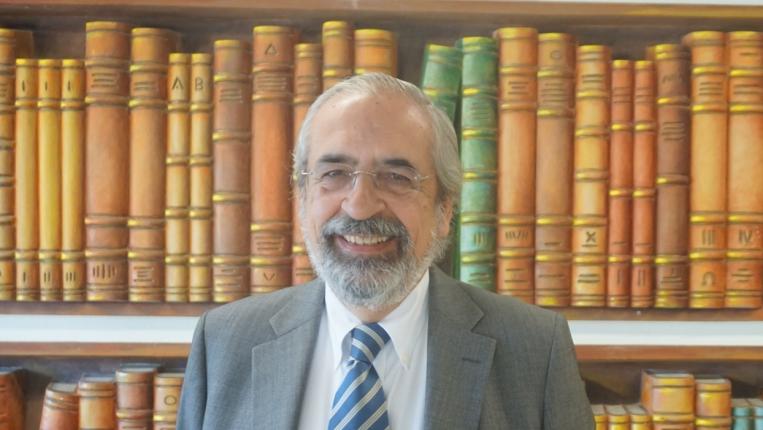
Nelson Frazão | Principal Investigator
Keywords: Microbiology | Evolution | Microbiome | Antibiotic resistance | Phage therapy
Links
Selected Publications
2026
https://www.biorxiv.org/content/10.64898/2026.05.27.728231v1
2025
https://doi.org/10.1371/journal.pgen.1011777
2023
https://academic.oup.com/mbe/article/40/7/msad153/7218899?login=false
2022
https://www.nature.com/articles/s41467-022-33412-8
2021
https://academic.oup.com/mbe/article/38/8/3220/6217365
2019
https://www.pnas.org/doi/10.1073/pnas.1906958116
Contacts
Microbiome Evolution Laboratory
Faculdade de Medicina
Universidade Católica Portuguesa | Sintra
Estrada Octávio Pato
2635-631 Rio de Mouro - Portugal
Tel. +351 218724312
Email: nfrazao@ucp.pt